

Hearing Test Hawkesbury
Do you think you might have hearing loss?
A professional hearing test is the first step — and we’re here to make it easy and stress-free.
Our hearing test is as simple as 1, 2, 3


Ear & Hearing Examination


Explanation of The Results
Discussion With The Audiologist


Signs You May Need a Hearing Test

Hearing loss often develops slowly and can be hard to notice at first. If you recognize any of these common signs, it may be time to schedule a hearing test:
You often ask people to repeat themselves
Conversations in noisy places (like restaurants) are difficult
You turn the TV or radio volume up higher than others prefer
Hearing on the phone has become harder
Family or friends have mentioned your hearing
You hear ringing or buzzing in your ears (tinnitus)
If these symptoms sound familiar, a professional hearing test can help you better understand your hearing and identify any potential hearing loss.
Protect Your Hearing: Why a Test Is Essential
A hearing test is essential for detecting hearing loss early. Because hearing loss often develops gradually, many people don’t realize their hearing has changed.
Living with undetected hearing loss can make conversations difficult, increase listening fatigue, lead to social withdrawal, and affect your overall quality of life.
At Earsonic, we offer a free hearing test for patients aged 60 and over, helping you check your hearing and take the right steps to protect your hearing health.

What you will get from our hearing test
-
A thorough evaluation of your hearing across a range of frequencies and volumes, helping to identify any issues with your ability to hear different sounds. A speech audiometry test to assess how clearly you can hear and understand speech at various volume levels. This helps determine how well you can communicate in everyday situations and may identify any difficulties in noisy environments.
-
A clear diagnosis of whether you have hearing loss, along with details about the type (e.g., sensorineural, conductive or mixed) and severity (mild, moderate, severe etc.) and possible etiology (age related, noise induced, genetic, trauma etc.) allowing you to understand the nature of your condition.
-
Based on the test results, you may receive personalized recommendations such as hearing aids, sound therapy, or other solutions designed to improve your hearing and quality of life.
-
If hearing aids are recommended, you will have the opportunity to try out the latest premium hearing aids models in the clinic. This hands-on demonstration allows you to experience how the devices work and how they can enhance your hearing.
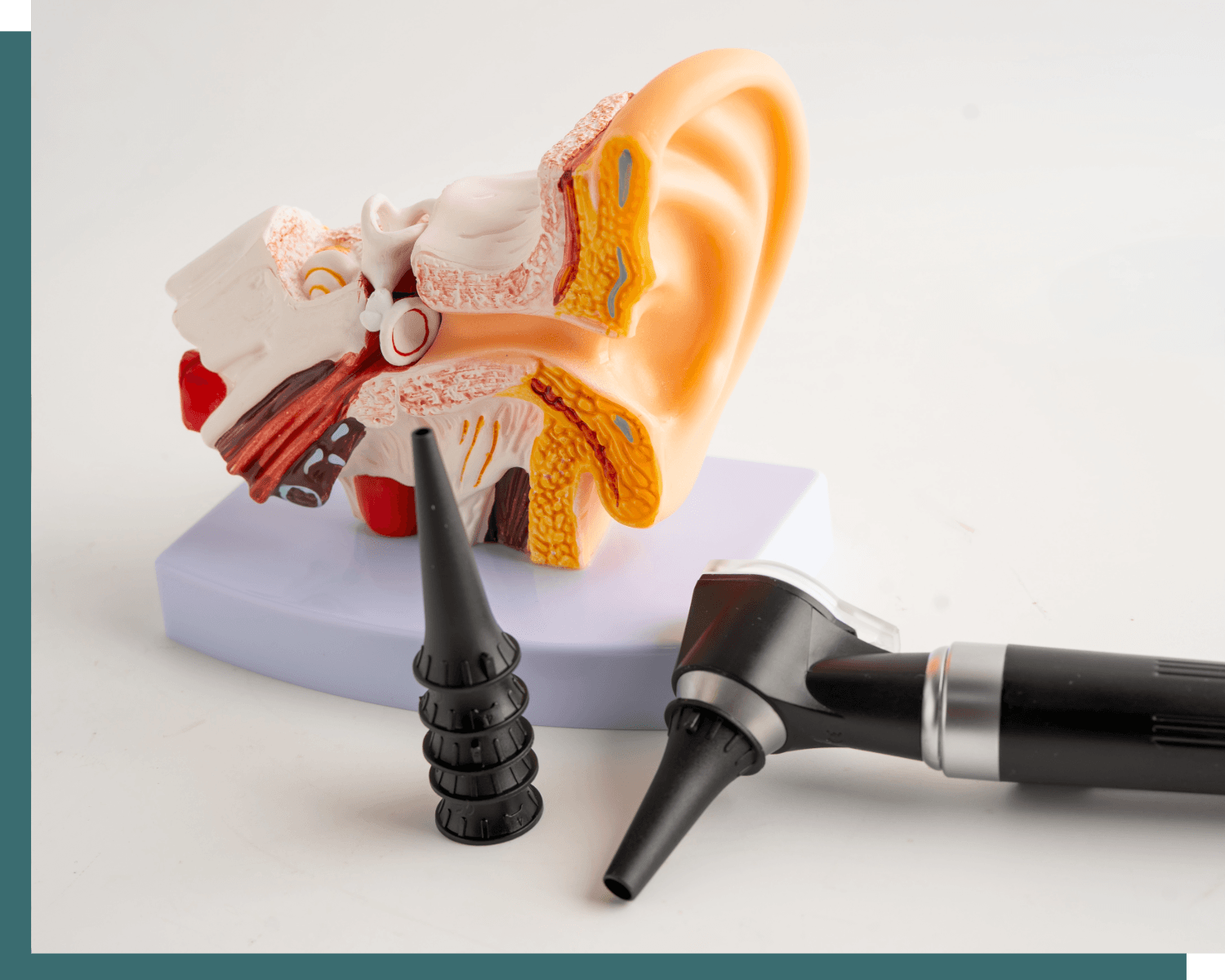
How Hearing Tests are performed ?
-
The first step is to visualize the ear canal and the ear drum and to identify any sign that requires medical attention such as an ear infection or inflammation, eardrum perforation, bleeding, cyst etc.
This examination can be done using a manual otoscope, a video-otoscope or under microscope (all three options are available at our clinic).
-
The next step involves assessing the function and movement of the eardrum and the three small ossicles located behind it.
This evaluation is conducted using a specialized device called a tympanometer, which applies gentle pressure to the eardrum for two seconds. (This testing is omitted if the ear has undergone previous surgery).
Additional testing may be recommended to assess the mobility of the three ossicles within the middle ear, if deemed necessary.
To assess their health and proper function, non-harmful sounds will be emitted to elicit a reflex response (recorded by the device) that protects the inner ear from loud noises. The presence of this reflex indicates normal and healthy functioning of the bones.
-
Assessing the inner ear is crucial during a hearing test.
This evaluation takes place in a soundproof booth where the patient wears earphones. They are instructed to press a button whenever they hear a beep or sound, even if it's faint.
Following this, the patient is asked to repeat words in a quiet environment and sentences amidst background noise.
Think you might be missing out on sounds around you?
Take our free online hearing test—it’s quick, easy, and takes a few minutes. A great first step toward better hearing, all from the comfort of your home!
How we hear sounds from our ears ?
-
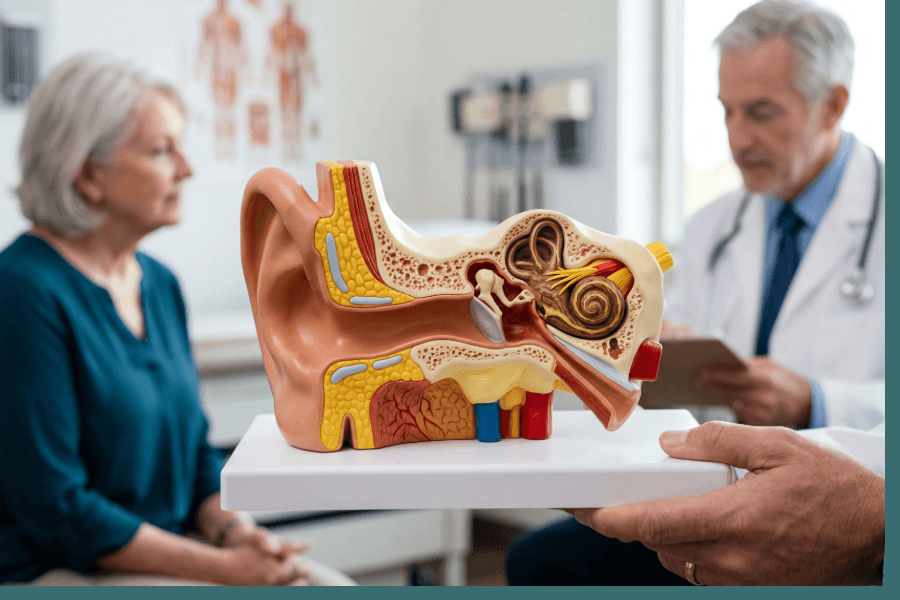
The process of hearing begins with sound waves entering the outer ear and traveling through the ear canal. These sound waves then reach the eardrum in the middle ear, causing it to vibrate.
-
The vibrations from the eardrum are passed along the three tiny bones in the middle ear - the malleus, incus, and stapes. These bones amplify and transmit the vibrations to the cochlea in the inner ear.
-
Within the cochlea, the vibrations are converted into electrical signals by specialized hair cells. These signals are then sent through the auditory nerve to the brain, where they are interpreted as sound.
Tips before your hearing test appointment

-
Having your health card number on file is essential for medical referrals, applying for ADP grants from the Ministry of Health, and submitting requests to third-party entities such as ODSP, WSIB, CNESST, and others.
-
Bringing a friend or family member to your hearing test provides emotional support, helps remember key information, offers additional insights about your hearing, and assists in making informed decisions about treatment options. It ensures you feel confident and well-supported throughout the process.
-
Preparing a list of symptoms before your hearing test helps the audiologist better understand your concerns, track changes in your hearing, and tailor the test to your specific needs. It ensures that no important details are overlooked and helps you communicate more effectively during the appointment.
-
Preparing a list of questions before your hearing test ensures you don’t forget important concerns or topics. It helps you get clear answers about your hearing health, treatment options, and next steps, making the most of your appointment and ensuring you leave feeling fully informed.
FAQs

-
No, a referral from a doctor is not required to have your hearing tested.
-
Hearing tests are not covered by OHIP. However, we offer complimentary hearing tests for patients above the age of 60 to keep care accessible.
For patients under 60 or specialized tests, fees may apply but are often covered by private insurance.
-
The length of a hearing test depends on its complexity, but it typically takes 20 to 30 minutes. We schedule up to an hour to review your history, answer your questions, and clearly explain your results.
-
Absolutely not, it is completely painless.
However, in rare instances, a patient may experience slight discomfort if there is an ongoing infection or very deep earwax present.
Prior to performing any procedure, such as earwax removal, the Audiologist will thoroughly explain the process. If there is any possibility of mild discomfort, such as a slight pressure sensation during certain tests, the Audiologist will inform the patient beforehand.
-
Not exactly. This is why the Audiologist conducts various types of tests that assess different aspects of the auditory system. Hearing involves a complex network of structures from the outer ear through to the brain, encompassing everything in between.
A patient may show normal hearing on the audiogram, indicating they have passed the test, but still experience significant difficulty understanding speech in noisy environments. Simply passing a standard audiogram does not always mean that hearing is completely normal; in many instances, there can be considerable damage to inner ear cells despite the audiogram appearing normal.
Hearing perception is nuanced and not straightforward; it exists within a broad spectrum rather than being simply categorized as normal or impaired.
-
It depends on several factors.
Hearing aids are medical devices and require a prescription because they are designed to treat specific types of hearing loss. However, not all hearing loss requires hearing aids.
For example:
Temporary hearing loss (from earwax, infection, or fluid) may not need hearing aids
Very severe hearing loss may not benefit from hearing aids
In some cases, speech understanding is too limited for effective use
That said, most common types of hearing loss—such as age-related or noise-induced—can be effectively treated with hearing aids, often with excellent results.